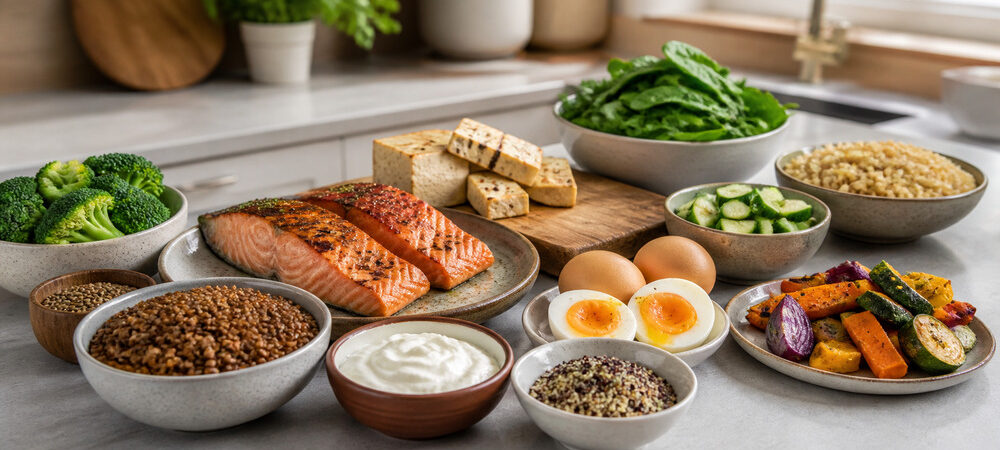
Protein intake for weight loss is often presented as a simple formula: eat more protein and lose more weight. The evidence supports a more qualified view. Higher-protein eating patterns may improve fullness and provide modest weight-management benefits for some adults, but protein does not make overall energy intake irrelevant.
This editorial review considers where protein may fit, why resistance exercise matters during calorie restriction, which foods provide protein, and when individualized advice is appropriate. The practical goal is not to pursue the highest possible intake, but to build a balanced and sustainable eating pattern.
Key Takeaways
- Protein may support fullness. Higher-protein diets can help some adults feel more satisfied and may offer modest weight-management benefits.
- A calorie deficit still matters. Adding protein to an otherwise unchanged diet does not automatically lead to weight loss.
- Exercise changes the picture. During calorie restriction, adequate protein combined with resistance exercise may help preserve lean mass.
- There is no universal target. Protein needs differ according to factors such as age, body size, activity, pregnancy, health status and goals.
- Food quality remains important. A useful plan includes varied protein foods alongside vegetables, fruits, whole grains and healthy fats.
How Protein Functions in the Body
Protein is an essential macronutrient used to build and repair tissues and produce enzymes, hormones and other body chemicals. Those functions are important at every body weight and should not be confused with a direct fat-burning effect.
Intentional weight management is different from losing weight without trying, which warrants medical attention.
When someone reduces energy intake, the aim may be to lower body weight while retaining as much lean mass as possible. Protein can contribute to that broader goal, particularly when paired with resistance exercise. It is one component of a weight-management plan rather than an independent solution.
Can Protein Intake for Weight Loss Improve Results?
A review of higher-protein diets found that these eating patterns can increase fullness and may lead to modest improvements in weight management for some adults. Feeling satisfied after meals may make an eating plan easier to follow, although responses vary and the benefit is not automatic.
Research findings also need to be viewed within their limits. A dietary pattern studied under controlled conditions may be difficult to maintain in everyday life. Results from a group of study participants cannot establish the ideal diet for every individual, and the term “higher protein” does not describe the quality or balance of the entire diet.
Protein may therefore be helpful when it improves meal satisfaction and fits comfortably into a sustainable pattern. It is less likely to help when it is simply added on top of existing meals without considering total energy intake.
Why a Calorie Deficit Still Matters
Weight loss requires energy intake to remain below energy use over time. Protein-containing foods contribute energy just as other foods do, so increasing protein cannot override the role of total intake.
This distinction is especially important when comparing substitution with addition. Replacing part of a meal with a suitable protein food is different from adding an extra shake, snack or large serving while leaving everything else unchanged. The latter may increase total intake even if the product is marketed for weight loss.
A calorie deficit does not have to mean that one food group dominates the diet. NIDDK guidance on keeping a healthy weight emphasizes a broader pattern that includes nutritious food choices and regular physical activity. A plan also needs to be realistic enough to continue over time.
Protein, Resistance Exercise and Lean Mass
Body weight alone does not show how much lean tissue or body fat has changed. During calorie restriction, the combination of adequate protein and resistance exercise deserves attention because a clinical trial found that these supports helped preserve lean mass better than calorie restriction without them.
That finding should not be interpreted as proof that protein alone prevents all lean-mass loss. It also does not establish that progressively higher intakes always produce better outcomes. The supported approach combines appropriate nutrition with resistance exercise rather than relying on a single nutrient.
How to Lose Weight Without Losing Muscle
No strategy can promise a particular body-composition result for every person. However, the cited evidence supports two practical considerations during calorie restriction: consume adequate protein and include resistance exercise when it is appropriate for your health and ability.
People who are new to exercise, have physical limitations or manage a medical condition may benefit from professional guidance before changing their activity routine. An individualized plan can account for current fitness, health status and weight-management goals.
How Much Protein Do You Need During Weight Loss?
The supplied evidence does not support one high daily number for all adults. Nutrient recommendations vary by life stage and individual circumstances, while personal protein needs can be influenced by age, body size, activity, pregnancy, health status and goals.
For that reason, copying a target from an influencer, packaged product or another person’s meal plan may be misleading. “More” is not automatically the same as “appropriate.” A person may already be obtaining sufficient protein, or a medical condition may change what is suitable.
A clinician or registered dietitian can help determine an individualized target when food intake is substantially restricted, weight change is significant, physical training is demanding, pregnancy affects nutritional needs or a health condition complicates dietary planning.
Does Protein Timing Matter?
Questions about protein at breakfast, protein after exercise or equal portions at every meal are common. The supplied sources do not establish one required meal schedule or universal amount per meal.
A practical starting point is to include a protein food in meals or snacks where it fits naturally, without losing sight of total intake and overall diet quality. People with treatment-related nutrition needs or specific training goals should seek personalized advice rather than treating a general timing rule as essential.

Healthy High-Protein Foods for Weight Management
Dietary guidance includes a range of animal and plant protein foods. Variety can help an eating pattern reflect personal preferences while providing room for other nutrient-dense foods.
- Seafood
- Lean meats and poultry
- Eggs
- Legumes, including beans, peas and lentils
- Nuts and seeds
- Soy products
A balanced eating pattern should not be judged by its protein content alone. Vegetables, fruits, whole grains and healthy fats also have a place. A product labeled “high protein” is not necessarily a better choice for weight management if the complete food or meal does not fit the person’s needs.
Plant-Based Protein Choices
Legumes, nuts, seeds and soy products can all contribute protein. The sources supplied for this review do not rank every plant option against every animal option for weight loss. Selection can therefore consider preference, dietary pattern and how the food contributes to the meal as a whole.
Variety may be more practical than trying to identify one “best” protein food. For example, someone might rotate legumes, soy foods, eggs, seafood or lean poultry according to their dietary preferences rather than building every meal around the same item.
Protein Foods Versus Protein Supplements
The cited evidence does not establish that protein powders or other supplements are necessary for weight loss. It also does not show that a powder improves results beyond an appropriate overall eating pattern.
Supplements can add to total energy intake and should not be treated as replacements for medical care or a balanced diet. Anyone considering a supplement should evaluate why it is needed and discuss it with a qualified professional if health conditions, restricted intake or other nutrition concerns are present.
Evidence Limits and Common Misconceptions
Protein research can answer specific questions, but it cannot provide one ideal plan for every reader. Studies may differ in duration, protein intake, comparison diets, participant characteristics and accompanying exercise. Findings about average results do not predict precisely how one individual will respond.
- “Protein burns fat.” Protein has essential biological roles, but weight loss still depends on a sustained energy deficit.
- “More is always better.” The evidence does not establish that the highest possible intake produces the best result.
- “A shake guarantees weight loss.” A protein supplement contributes to total intake and is not required by the cited evidence.
- “Protein alone protects muscle.” The relevant trial examined adequate protein together with resistance exercise during calorie restriction.
- “One target fits everyone.” Nutritional needs vary with life stage, health and other personal factors.
When to Seek Care
Emergency Care
Call the local emergency number for severe or life-threatening symptoms. Do not delay emergency help while trying to correct symptoms by changing protein intake, taking a supplement or adjusting a weight-loss plan.
Urgent or Prompt Advice
Seek prompt professional advice if you have chronic kidney disease and are planning a major increase in protein. Guidance may need to account for kidney function, current treatment and the rest of the diet.
Prompt assessment is also appropriate when dietary restriction is making it difficult to meet basic nutritional needs or when a weight-management approach is causing concerning symptoms. A restrictive plan should not be continued simply because it has been described as high protein.
Routine Appointment
Arrange a routine appointment with a clinician or registered dietitian if you want a personalized protein target, have questions related to pregnancy or activity, or need help creating a sustainable calorie deficit. Weight loss that occurs without intention should be discussed separately with a healthcare professional rather than assumed to be a successful dietary effect.
Lifestyle Steps for a Sustainable Plan
- Review the whole eating pattern. Consider meals, snacks and drinks rather than focusing only on protein grams.
- Decide whether you are adding or substituting. Simply adding protein foods or shakes may raise total energy intake.
- Choose varied protein foods. Use options such as seafood, lean meats or poultry, eggs, legumes, nuts, seeds and soy products according to your preferences.
- Keep other food groups present. Make room for vegetables, fruits, whole grains and healthy fats instead of allowing protein to crowd them out.
- Use fullness as feedback. Notice whether a change actually makes meals more satisfying and the plan easier to maintain.
- Include resistance exercise when appropriate. Protein and resistance training may work together to support lean mass during calorie restriction.
- Avoid chasing the highest target. Adequacy and sustainability are more useful goals than maximizing intake without a clear reason.
- Seek tailored advice when needed. This is especially important with chronic kidney disease or other circumstances that affect nutrition.
Next Step
Start by identifying the protein foods already present in a typical day and whether adding more would support fullness or merely increase total intake. Then choose one realistic adjustment, such as including a protein food in a meal that is usually less satisfying or pairing an appropriate calorie deficit with resistance exercise.
If a medical condition affects nutrition, or if you cannot determine a suitable target without heavily restricting your diet, bring a short food record and your questions to a clinician or registered dietitian. The most useful protein plan is one that is individualized, balanced and sustainable.
FAQ
Does eating more protein help with weight loss?
Higher-protein eating patterns may increase fullness and provide modest weight-management benefits for some adults. Weight loss still requires a sustained energy deficit, and simply adding protein may increase total intake.
How much protein should I eat while losing weight?
There is no single high target suitable for everyone. Needs vary with factors such as age, body size, activity, pregnancy, health status and goals. A clinician or registered dietitian can provide an individualized target.
Can protein prevent muscle loss during a calorie deficit?
Adequate protein combined with resistance exercise may help preserve lean mass during calorie restriction. The evidence does not show that protein alone prevents lean-mass loss in every person.
Are protein powders necessary for weight loss?
No. The supplied evidence does not establish that protein supplements are required or that they improve weight loss beyond an appropriate overall eating pattern.
Sources
- MedlinePlus — Protein in diet
- PubMed — Higher-protein diets review
- PubMed — Protein and exercise trial
- NIDDK — Factors Affecting Weight and Health
- Dietary Guidelines for Americans 2025–2030
- NIH Office of Dietary Supplements — Nutrient recommendations
This article is for general information only and does not replace advice from a doctor, GP, pharmacist, or qualified healthcare professional.