
Key Takeaways
- GLP-1 receptor agonists imitate the effects of the incretin hormone GLP-1, influencing insulin release, glucagon secretion, stomach emptying and appetite.
- Some GLP-1 medications are approved for type 2 diabetes, while others are approved for chronic weight management. Products should not be assumed to be interchangeable.
- Nausea, vomiting and diarrhea are common GLP-1 side effects, but contraindications and other risks depend on the specific product.
- Prescription weight-loss medication is intended to be used with lifestyle changes rather than as a replacement for them.
- Weight regain may occur after weight-management medication is stopped, so follow-up and longer-term planning are important.
- Unapproved GLP-1 products have not undergone regulatory review for safety, effectiveness or quality before marketing.
How GLP-1 Medications Work
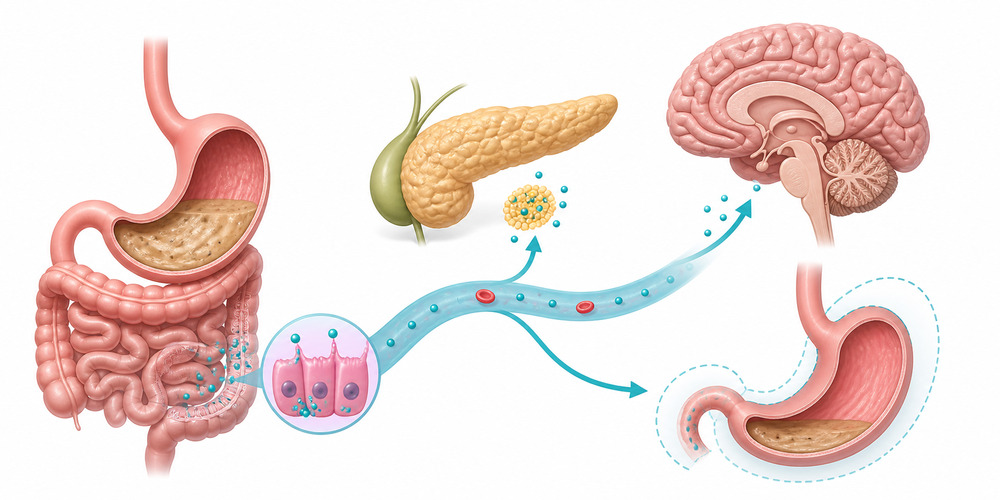
GLP-1 receptor agonists are prescription medicines designed to mimic glucagon-like peptide-1, commonly shortened to GLP-1. GLP-1 is an incretin hormone involved in the body’s response to food. Medicines that act on its receptor can affect several processes at once, which helps explain their roles in blood sugar management and, for certain products, chronic weight management.
The class has four central effects: it increases glucose-dependent insulin release, reduces glucagon secretion, slows gastric emptying and decreases appetite. These actions are related, but they do not mean every person will have the same response. They also do not make every medicine in the class suitable for every blood sugar or weight concern.
Insulin and glucagon effects
Insulin and glucagon both help regulate blood glucose. GLP-1 receptor agonists increase insulin release in a glucose-dependent manner, meaning the effect responds to the presence of glucose. They also reduce glucagon secretion. Together, these mechanisms support the use of certain GLP-1 medications in managing type 2 diabetes.
The term “glucose-dependent” should not be interpreted as meaning there are no risks. Individual responses, other medicines and product-specific considerations still need clinical review. A mechanism describes how a medicine acts; it cannot determine whether that medicine is appropriate for a particular person.
Slower gastric emptying
GLP-1 medications can slow gastric emptying, which is the movement of stomach contents into the intestine. This digestive effect contributes to how the class works, but it should not be converted into a universal claim about exactly how long food remains in the stomach. Effects differ, and the relevant risks and instructions must be checked for the prescribed product.
Appetite and fullness
Reduced appetite is another recognized effect of GLP-1 receptor agonists. More generally, prescription medications for weight management may help a person feel less hungry, eat less or feel full sooner. That can make planned dietary changes more manageable for some people, although results cannot be predicted from the mechanism alone.
GLP-1 Medications for Diabetes and Weight Loss
A major limitation of broad discussions about GLP-1 medications is that they can make the entire class sound interchangeable. It is not. A product may be approved for type 2 diabetes, chronic weight management or another specific labeled purpose. The ingredient name alone is not enough to establish the correct use.
Semaglutide illustrates why the distinction matters. Different semaglutide products have been approved for different indications, including type 2 diabetes and chronic weight management. A product intended for one purpose should not automatically be substituted for another. The exact product, formulation and approved indication should be confirmed with the prescriber.
Someone without diabetes may be considered for a product approved for chronic weight management if that person meets the relevant criteria and a clinician finds it appropriate. This does not mean a diabetes-labeled semaglutide product can simply be treated as an equivalent option.
Anyone researching symptoms rather than an established diagnosis may also find the journal’s guide to early diabetes symptoms useful. Symptoms by themselves cannot establish whether diabetes is present or whether a GLP-1 medication is appropriate.
Who May Be Considered for Weight-Management Medication?
Prescription weight-management medication may generally be considered for adults with a body mass index, or BMI, of 30 or above. It may also be considered at a BMI of 27 or above when weight-related health problems are present.
These figures are general consideration thresholds, not automatic eligibility rules. BMI is only one part of the decision. A prescriber must consider the person’s health circumstances, the reason for treatment and the labeled requirements and risks of the specific medicine.
Intentional weight management should also be distinguished from unexplained weight loss. Losing weight without trying does not mean that a weight-management medicine is needed. It is a separate concern that warrants professional assessment. The journal’s article on losing weight without trying and diabetes addresses that symptom-focused question.
Benefits, Evidence and Important Limits
The established biological basis for this medicine class includes glucose-dependent insulin release, reduced glucagon secretion, slower gastric emptying and lower appetite. These mechanisms support the approved uses of particular GLP-1 receptor agonists.
They do not support promises about exactly how much weight any individual will lose or how quickly blood sugar will change. Products, indications and individual responses differ. Decisions should therefore focus on whether a specific medicine is approved and suitable, how its effects will be monitored and what the longer-term plan will involve.
Prescription weight-loss medication works best as part of a broader weight-management plan that includes lifestyle changes. Medication is not intended to replace appropriate nutrition, physical activity or ongoing support. The practical details of that plan should fit the individual’s health needs and circumstances.
It is also important to discuss what may happen if treatment ends. Weight regain can occur after a weight-management medication is stopped. This does not predict the outcome for every person, but it makes follow-up planning essential. Stopping should be discussed with the prescribing clinician rather than treated as an afterthought.
GLP-1 Side Effects and Safety Limits
Common gastrointestinal effects
Common adverse effects of GLP-1 receptor agonists include nausea, vomiting and diarrhea. A general list cannot determine whether a symptom is mild, severe or caused by the medicine. The product information and prescriber’s instructions remain important because risks differ among products.
People who develop symptoms should contact the prescriber or another appropriate healthcare professional for advice. A symptom record noting what happened and when may support that conversation, but it should not be used for self-diagnosis.
Contraindications and interactions
Contraindications and other safety considerations are product-specific. There is no single online checklist that can safely determine whether every medicine in the class is suitable.
Before treatment, give the prescriber a complete list of prescription medicines, non-prescription products and other substances being taken. This allows the clinician to review possible concerns for the exact GLP-1 product rather than relying on general assumptions about the class.
Why products should not be switched casually
Different semaglutide products may have different approved indications and are not automatically interchangeable. Do not switch, substitute or repurpose a product without advice from the prescriber. Similar ingredient names do not establish equivalent labeled uses.
Concerns about unapproved GLP-1 products
Regulators warn against unapproved versions of GLP-1 medicines. These products have not undergone review for safety, effectiveness or quality before they are marketed. A familiar ingredient name does not remove that concern.
Confirm the exact product through a legitimate prescriber and dispensing route. If the packaging, product identity, approval status or intended use is unclear, do not rely on an online comparison to resolve the issue. Ask a qualified healthcare professional to review what was supplied before using it.
When to Seek Care
Emergency care
Call the local emergency number if you believe you are experiencing a medical emergency. Product risks differ, and a general article cannot provide a complete emergency-warning list for every GLP-1 medicine. Do not use the absence of a symptom from this guide to rule out an emergency.
Urgent medical advice
Seek urgent clinical advice if nausea, vomiting, diarrhea or another symptom after taking the medicine is severe, worsening or causing immediate concern. These gastrointestinal symptoms are recognized adverse effects, but their urgency can only be assessed in the context of the individual situation.
Promptly contact a healthcare professional if you believe you received the wrong product, an unapproved version or a semaglutide product labeled for a different purpose. Do not switch products or continue using a questionable product solely on the basis of general online information.
Routine follow-up
Arrange a routine appointment to discuss whether a GLP-1 medication may be appropriate, how BMI and weight-related health problems affect eligibility, or how side effects and product-specific contraindications should be reviewed.
Follow-up is also appropriate when evaluating whether the medicine is meeting its intended purpose or when considering stopping weight-management treatment. Because weight regain can occur, the plan after treatment deserves the same attention as the decision to start.
Lifestyle Steps for Sustainable Weight Management
Daily habits and medication should be treated as coordinated parts of one plan. Practical actions can make appointments more useful and help the prescriber assess treatment over time.
- Confirm the treatment goal. Ask whether the medicine is being prescribed for type 2 diabetes, chronic weight management or another labeled purpose.
- Check the exact product. Record its full name and verify that its approved indication matches the reason it was prescribed.
- Bring a complete medicine list. Include prescription drugs, non-prescription products and anything else being taken.
- Track relevant symptoms. Note nausea, vomiting, diarrhea or other changes, including when they occurred, and share the record with the prescriber.
- Choose manageable lifestyle changes. Discuss eating and activity changes that fit the individual’s circumstances instead of treating medication as a stand-alone approach.
- Ask how progress will be reviewed. Clarify what follow-up is expected and when benefits, side effects and suitability will be reassessed.
- Plan for possible discontinuation. Ask what support may be needed if treatment stops, since weight regain can occur.
- Verify the supply route. Avoid unapproved GLP-1 products, which have not received premarket review for safety, effectiveness or quality.
Next Step
Bring the product name, treatment goal, current medicine list and key questions to the prescribing appointment. Confirm that the medicine’s labeled indication matches the reason for use, review its specific risks and agree on a follow-up plan. GLP-1 medications share a broad mechanism, but safe treatment depends on the individual product and continuing clinical supervision.
FAQ
How do GLP-1 medications lower blood sugar?
They increase glucose-dependent insulin release, reduce glucagon secretion and slow gastric emptying. Individual response and suitability still require clinical assessment.
How can GLP-1 medications support weight management?
They can reduce appetite and slow gastric emptying. Certain approved products may help people eat less or feel full sooner and are intended to accompany lifestyle changes.
Can someone without diabetes use semaglutide for weight management?
Some semaglutide products are approved for chronic weight management, while different products are approved for type 2 diabetes. Eligibility and the exact product must be reviewed by a prescriber.
What are common GLP-1 side effects?
Common adverse effects include nausea, vomiting and diarrhea. Other risks and contraindications vary by product and should be discussed with the prescriber.
Can weight return after stopping a GLP-1 weight-management medicine?
Weight regain can occur after weight-management medication is stopped. A clinician can help plan follow-up and continued lifestyle support.
Sources
- NCBI Bookshelf — GLP-1 receptor agonists
- NIDDK — Prescription medications to treat overweight and obesity
- FDA — Medications containing semaglutide
- FDA — Concerns with unapproved GLP-1 drugs
This article is for general information only and does not replace advice from a doctor, GP, pharmacist, or qualified healthcare professional.